sábado, 14 de marzo de 2015

Some observations on the reading lists before and after the turn of the century


The young people who participated in our survey were between 12 and 15 years old, that is, they are the daughters and sons of the new century, of the milennium. The production of books for children and young adults has grown alongside them and, together with the educational programmes related to reading promotion during these years, this means that this generation of Mexicans has had the most books within their reach. It is ironic that it is also the generation that has had the most access to electronic activities which probably distract them from reading (although we are only just glimpsing what these activities could really mean for their literacy practices), however, it seems this does not mean that they have stopped reading. 

In this blog post we will comment on the list of titles obtained from the survey and also on the differences and similarities between 1992 and 2014 in terms of what the market offers and reading preferences. Athough some of the 2014 survey’s questions were changed due to practical reasons, we believe that the list allows us to make some tentative observations about the changes in the last 25 years, changes that take us from a time in which Harry Potter was totally unknown (perhaps even to his creator) to a time in which he is a character familiar to millions of readers around the world; therefore, an alternative title for this blog could well be “Reading in Mexico pre- and post- Harry Potter”.

In the survey we applied in September 2014 to 209 second and third year secondary students, we asked them to write down the names of the books that they remembered reading when they were “very little”; “in primary school” and “in the last two months”. The result was a total list of about 350 different titles. They mentioned stories as well as books and we don’t know how many they actually finished reading  but despite this and some questionable responses (Fifty Shades of Grey when they were “very young”?), the list of titles is revealing in many ways.

The great variety of these titles is what is immediately apparent; although some titles are repeated, these are fewer than those which appear only once. The most frequently repeated titles were “The Three Little Pigs and the Wolf” (70); “Little Red Riding Hood” (57) and The Little Prince by Saint-Exupéry (44).  The rest belong to various literary genres: fables, fairy tales, traditional stories (myths and legends), non-fiction, picturebooks, graphic novels, comics, classic and contemporary children’s and young adult literature and books “for adults”, both classic and contemporary.

If we concentrate only on the list of 130 titles that the adolescents said they had read in the two months before the survey (that is, during the summer of 2014), we can see that they continue to read this variety of genres, in particular, non-fiction (especially historical), “self-help”, comic strips, traditional stories and legends. However, the books that predominate are those that we could classify as “children’s literature” or “YA literature”, together with literary “classics” and “best-sellers” for adults. Among the classics there are clearly books that were required as school reading but there are also signs of a growing interest in novels and poetry.

In the questionnaire from 1992 (92 students), if we set aside the required school reading, there was also a prevalence of non-fiction and self-help books but the titles that stood out were novels of “social-realism” (sex, drugs, abuse, relationships) with young protagonists, for example, Born Innocent, Go Ask Alice and Sara T – Portrait of a Teenage Alcoholic. A few other books were based on human development or “spiritual” themes, such as Jonathan Livingston Seagull. (It is worth noting that this questionnaire was carried out a few years before the appearance of the extraordinarily successful books by Carlos Cuauhtémoc Sánchez, which provide conservative self-help messages within overly dramatic narratives involving young people; these were the most read titles in a similar survey carried out with a similar age group a few years later in 1996). The only two books that could be classified as “children’s literature” were Little Women and Tom Sawyer.

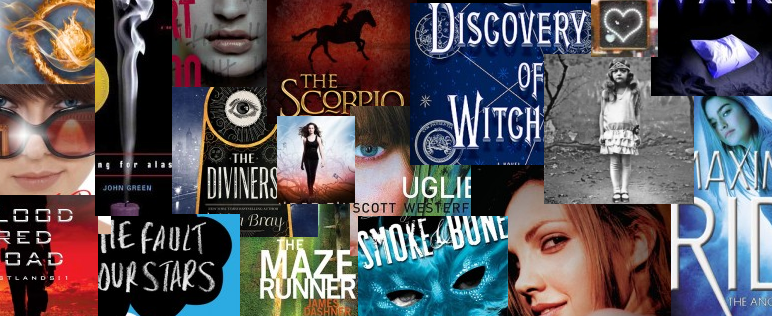
Fast-forward to 2014 and the most popular books are: The Fault in our Stars (29), Around the World in Eighty Days (12), The Hunger Games (11), Harry Potter (volume not always specified) (7), Fifty Shades of Grey (6), Twilight (6), The Boy in the Striped Pijamas (5), Catching Fire (5), Ghostgirl (5) and Three Metres above the Sky (5).  Several trends are immediately apparent: first, the number of readers for John Green’s novel; second, that among these first ten titles, six are marketed specifically for “young adults” (while The Boy with the Stripped Pyjamas can be considered a “cross-over” book). Eight of these books had also been made into films (Fifty Shades had not yet been released). Among the rest of the titles there are many other books that are marketed as “children’s or YA literature”, including Divergent, Diary of a Wimpy Kid, Momo, and  Percy Jackson among others. While most are translations, a few books by Mexican authors appear, such as La panza del Tepozteco [The Belly of the Tepozteco] by José Agustín and Siete cadáveres decapitados [Seven decapitated cadavers] by Antonio Malpica. Finally, graphic novels make an appearance, which they did not do in the list from 1992.

A few books seem to have survived the transition into the new century (perhaps it is because they were reccommended to the readers by their parents’ generation?). Among the books that were mentioned in 1992 and appear again in 2014, are The Diary of Anne Frank, Go ask Alice, Alice in Wonderland, Tom Sawyer, Jonathan Livingston Seagull and The Little Prince. There are also several books by Cuauhtémoc Sanchez (Un grito desesperado, Juventud en éxtasis and Los ojos de mi princesa).


From this initial view of the survey results, we can conclude that young people ARE reading, and that ‘post- Harry Potter”, they read more books and within a greater variety of genres. The results also suggest that the reading of children’s and YA literature has greatly increased, and that, in spite of or perhaps because of film, interent and social media, young people continue both to find pleasure and to look for answers in books.

martes, 10 de febrero de 2015

Idhún, A Shared Dream

We all know that reader response is a great enigma, reading is a personal activity, a connection with the text that is so intimate that those of us who want to know more about it, about its effects, about the marks that an  imaginary world has left on the reader, have to approach it through certain physical clues and verbal comments that are shared in an act of confidence or, perhaps, in a school exam. In our “Reading Changes” project, we did not want to recur to any tests or exams because our space had been created based on interest and freedom to participate, there was no assessment, it was not an obligatory workshop but instead a moment in which to be with other people who had read the same book and wanted to talk about it; we could even share popcorn or sweets with the students who chose to stay with us after school. One of the things that impressed me most about the last sessions was noting how the readers had learned the little rules of conviviality and of dialogue. Those who work with adolescents will know how important it is to achieve this, it implies we have gained their trust and that they value being there, in the hot rooms that housed the school libraries, with outside noises that seduce and lead the mind toward leisure time. In spite of all this, the students were there, passing the audio recorder on to whoever was talking, attending to Evelyn’s suggestions, following the debate, offering answers, taking ownership of the book, making it part of their vital experience.
As the last book, we were vindicated in the choice of offering the participants the first volume of the saga Memorias de Idhún. La Resistencia (Memoirs of Idhún. The Resistance), by the Spanish author, Laura Gallego García, a young narrator who has caused a sensation in her country and in Latin America, above all because of this fantasy saga in which she creates the parallel world of Idhún with its magical beings. She shows herself to be a good demiurge because, as Tolkien would say, she manages to make her cosmos visible, she succeeds in the voluntary suspension of disbelief as she convinces us of the truth of her art in which, as well as her anthropomorphic beings, inheritors of different mythologies, including the Mesoamerican, she constructs a world that contains “seas, with the sun, the moon and the sky; with the earth and all that it contains: trees and birds, water and stone, wine and bread, and ourselves, mortal men, when we become spellbound’ (Tolkien 19). Not in vain does the author confess that from the age of fifteen she has been thinking and dreaming about that place and the long story she is going to share with her readers, so we can revive our own life experience through the reading.
At first, our group of adolescents were anxious because the book had more than 500 pages, but some devoured it and wanted to discuss it after just one week. It is the dynamic rhythm of the events and the seductiveness exerted by this story that is to blame for their enthusiasm. It all begins with Jack, a thirteen year old boy, who is urgently riding his bike home because he has a bad premonition which is fatally borne out: within a few minutes, he finds himself without a family, a home and about to die. He is rescued by two strangers who take him to an unknown place, a kind of refuge for the members of the Resistance, a group that is against  the invaders of the planet Idhún and who are trying to save any exiles from this planet who have arrived on Earth. All the girls and boys could put themselves in Jack’s shoes, especially those who live in the city where insecurity is evident and danger threatens both them and their families. This why they could comprehend the possibility of  gratuitous violence that could leave them unprotected and without a home. With that beginning, there was no chance of losing these readers, they wanted to know more.
One key element of the Fantasy genre is its power to evade the dominant reality, a power that some people criticize and consider dangerous, but that is often necessary, we need it and it allows us to see in that imaginary text the symbolic representation of our social problems and human anxieties, as well as our hopes and dreams. It offers, as Tolkien said, comfort. Several of the readers mentioned that the book had made them forget their problems, it had submerged them in the adventures of the characters that made them suffer and laugh. One girl in particular, who usually assumed a defensive posture, did not want to admit she had read the novel, however, when we spoke of this possibility of evasion, she let herself go and spoke of her own reactions but when she realized we were all listening to her attentively, she returned rather aggressively to her former posture. Yet she had already revealed something important of her reading process: these characters –Victoria, Jack and Kirtash- were important to her, their love triangle, their doubts, their fears were also hers and for a few hours she had left behind that which was troubling her in real life, loneliness, a unstable home and an aggressive environment.
In the rural secondary it was a great pleasure to talk about the book, those who had finished it got together in a smaller group so as not to reveal the ending to the others. I became one more passionate reader as we spoke of the weaknesses in Victoria’s character, of Jack’s strength, of Kirtash’s  hidden humanity. The young people remembered important scenes, they revived the sensation of fear and anger that the interaction of the protagonists had provoked, as well discussing the tests that they went through throughout the narrative. They remembered dialogues, moments of crisis and they leant forward towards the centre of the circle to emphasize their words, so as not to speak too loudly and disturb the others, their eyes shining, reflecting their desire for the next volume, wanting to know what would happen. In this way, the author concretizes her most profound hope: to share that dream, to take new readers to Idhún who are avid to find out about its characters, its geography and history, its original language, thanks to the truth of art and the creative capacity of the artist.
Laura Guerrero

Bibliography:
Tolkien, J.R.R.”Sobre los cuentos de hadas”.  Árbol y hoja, y el poema Mitopoeia. Intr. Christopher Tolkien. Barcelona: Minotauro, 1994. Pp 11-100.
Gallego García, Laura. Memorias de Idhún. La resistencia. Madrid: SM, 2005.


viernes, 16 de enero de 2015

Of Words, Images and Readings: A creative approach to the graphic novel


The graphic novel is an artistic genre for our time which grabs the attention of readers of all ages and in all countries and one of its greatest riches is that it appeals to the contemporary reader who is used to a hybrid reading involving images and words in a special interrelationship  that demands an active and creative de-codification. The contents of contemporary graphic novels respond to the social, political and artistic conditions of our world today, they speak of our problems and desires. They have left the simple and easy formats to one side and are now characterized by the complexity of their aesthetic construction. The reader must be disposed to approaching them in a playful, subversive and irreverent manner.

Certainly, every reader has particular competencies that will depend in great measure on their repertoire of previous reading and their cultural and life experiences, which is why these will be different for each individual. In general, the adolescent participants had read comics and “photo-novels”, popular forms of graphic narrative that favoured their understanding of Haghenbeck’s  Justicia divina (see a summary of this book in a previous blog entry). Their cultural experiences also helped them make sense of the allusions to some of the legends and historical characters that appear in the text. The immediacy of the strong and enigmatic images created a first impression that was favourable and enthusiastic and which culminated in a fluid and pleasurable reading despite the complexity of format and the ironic, sometimes sarcastic, character of the graphic novel.

The aesthetic and discursive refinement of the graphic novel, as exemplified by Justicia divina, allows the reader to interact with both visual and written codes at the same time. This process implies interpreting and comprehending the interaction between them and, even if one is not an expert and is not completely conscious of it, it is possible to appreciate the aesthetic effects of this relationship and to enter into the dynamic it requires. 

Starting from the notion that in the literary exercise there is an interaction between the reader and the text, in this instance we were particularly interested in exploring the way in which the readers slide from the verbal to the visual. In Justicia divina, the action has several temporal jumps and changes of characters, which is why we wanted to see how traditional forms of reading were subverted. We also asked ourselves about the way in which the presence of an intradiegetic narrator protagonist that introduces their thoughts throughout the narrative could favour the reader’s complicity.  Taking this into account and in order to go further than oral responses, we wanted to create an activity that could help understand the forms in which a hybrid text like Justicia divina is apprehended by the young people. However, we found ourselves having to consider some important aspects: on one hand, an activity that only included text would be insufficient as it would leave aside the fundamental value of the image; on the other hand, a task dedicated to the visual responses could confront readers with the difficulties of drawing and therefore limit their expressive capacity. Therefore, we decided to create a task where both word and image would be tools for expression.

We based it on the three characters who had greatly interested the readers and made them laugh: the three legendary ghosts El Coco (the Bogeyman), La Llorona (the Crying Woman) and El Monje Loco (the Mad Monk). At the end of one of the sections of the graphic novel, the history of these characters is left open, something which permits the readers to speculate on their destiny and even imagine a narrative which is independent of this book. Therefore, we created an imaginary scenario where the action would take place: a kiosk (similar to the one that actually exists in the communities of both schools). The drawing, printed in A3 size paper, allowed the workshop participants to place a picture of the characters (also previously drawn and printed) in this space. The young people were then encouraged to write dialogues and put together the scene.

This activity offered them the opportunity to interact in a creative manner with the visual and written codes and, above all, develop alternative texts through their imagination using language for play and humour. The majority of the participants even added “rude” words, enjoying the opportunity that the workshop and the reading afforded them to subvert the formal language of the texts required by school.


An example of this activity is the scene created by one of the girls where Victor (the protagonist, drawn and added by her own initiative) meets the three spectres. The dialogue refers to the enjoyment these ghosts derive from reading fashion magazines but also to the theme of fear. It is interesting to note that the directionality of reading proposed by this girl is not the usual from left to right, rather, it begins with Victor’s words on the far right and seems to flow to the left, ending with the enthusiastic exclamation of the Mad Monk:

Victor: So, are we going to see each other here every month? You bring your magazines and I'll bring mine, ok?
Coco: You can give us advice on how to be better at frightening.
Llorona: Yes, and that way we can win over all the other fears in this country.
Mad Monk: Great! That's what we'll do.


The three spectres are grouped close to one another and Victor is approaching them. The brief dialogue between the characters is presented as a chat between a group of friends that support each other, giving the narrative an affable and fraternal character.

Through this activity, the readers reconstructed the mood of the text and created their own scene using the same iconotextual language of the text. In this way, the creative experience was transformed into a way of knowing. The task allowed us to observe how the readers activate their multimodal competence, that is, the capacity to select, activate, connect and interlink abilities and knowledge necessary for the reception of a text constructed with different codes and media and therefore, to elaborate meanings from an integrative perspective in order to carry out a reading that is both deeper and richer.

domingo, 21 de diciembre de 2014

martes, 9 de diciembre de 2014

How much water does your “River of Reading” carry?


What place does reading have in your everyday life? How much do you read over a week? What type of texts? These were some of the oral questions we asked the young participants in the project. They replied that they read very little due to time spent on their other activities which include playing sports, playing with their phones or even working in their family’s shop at weekends. However, when we asked them to make a collage with all the types of texts that they read, they surprised themselves given it turned out they read much more than they thought. The visual exercise also encouraged a more creative response to the above questions, reflecting a sense of the fluidity with which we all move through the texts in our surroundings. This activity, called “Rivers of Reading” was originated and developed by academics in the area of literacy education (Burnard, 2002; Winchester, 2008; Cliff-Hodges, 2010). This strategy was also used successfully in a previous project, Journeys from Images to Words (McAdam et al 2014, see http://www.journeys-fromimagestowords.com/) with students from primary schools in the city of Glasgow, to show how languages and literacy practices can be valued in a school with children from many backgrounds and cultures.

In Glasgow we found that the children included a great variety of texts, both from books and magazines as well as film, video and other multimodal texts. We carried out an analysis which grouped these texts into categories following some of the ones developed by Cairney & Ruge (1998) y Marsh (2004). We discovered that the largest category referred to the literacy practices whose objective was to obtain information, closely followed by the category related to reading for pleasure or self-expression (a more detailed analysis and conclusion can be found in the Final Report of the project, available for download from http://esmeefairbairn.org.uk/news-and-learning/publications/journeys-from-images-to-words).

Among the young Mexicans we also found a great variety of texts amongst which functional and entertaining ones and those engaged with for entertainment and pleasure stood out, as well as those that have to do with digital social media communication (Facebook, Whatsapp, Instagram). Textbooks were mentioned in most of them too. We also found “self-help” books, magazines and the graphic novel they were all reading for the project (Justicia divina by F. Haghenbeck – see a previous blog entry about this book). They mentioned films, videos and song lyrics. Handwritten notes appeared, as well as a reference to love letters. On the other hand, recipes, nutritional information on food packages and labels on beauty products also form part of their daily reading.


The “Rivers” can also incorporate tributaries, that is, the literacy practices of other members of the family. In Mexico, where many young people still live in extended families, with several generations in the same house, we found tributaries with the reading of grandparents or cousins were also included. Through this activity, therefore, it is possible then to create a picture of rivers that interconnect and that reveal a fertile ground for research and pedagogy.

The activity allowed us to learn about the literacy practices that occur in the home without intruding into students’ houses. It also lead to conversation with the participants about the type of texts, particular titles, where they access them and what they got from them. It also invited us all to think about how reading practices change according to age or gender and what overall role literacy practices have in their lives.

Whether as strategy for research or for pedagogy, at the beginning of this activity it is important that the teacher or researcher creates their own “River” and shares it with the students. While it must be specified if the task is to take place over a day, a week or a weekend, it is important to clarify that the teachers’ is not the only possible model, each student should draw their river’s trajectory as they prefer. In Mexican project, both Evelyn and one of the librarians created their “River” and presented it to the students for comment. The students were then asked to carry out the task over a week. 


Evelyn’s “River of Reading”

Many of the texts mentioned by the students are overlooked or ignored by teachers and by the curriculum in general, which means opportunities for getting to know students’ literacy activities in more depth and to incorporate these into the classroom are wasted. The conversations about reading and texts that are familiar to students can enrich the work done with set texts in school. They can be used, for example, to work on intertextuality or to find out how digital activities can accompany a text (given that young people tend to know how to use this medium better than their teachers); for example, they can discuss the reviews that “booktubers” present on youtube or they can enter webpages or forums created by contemporary children’s or YA authors. They can analyze the language and images of commercials, posters or political slogans. The ingredients of food or beauty products can be used for an activity in the Chemistry class. Even when the material obtained via the “Rivers” is less for some than for others, a panorama of the whole group can be created, using lists or graphs by categories. Students can also consider the types of texts and reading that are missing from these lists. Finally, several “Rivers” can be created throughout the school year, showing how texts change or how reading interests can develop across a particular period of time.

In terms of research, Gabrielle Cliff-Hodges concludes:
… the idea of rivers of reading associates strongly with the narrative, temporal and historical; the idea of mapping the terrain of readership associates strongly with the sociocultural and spatial. For all these reasons, collage-making seemed to be a suitably thought-provoking research method to use. (p.188)

In terms of pedagogy, Julie McAdam and the rest of the team concluded:
The Rivers of Reading task is a useful way of promoting discussion about literacy practices at home and school. It allows children opportunities to connect their home practices to those of the school and it also provides teachers with valuable insights into the out-of-school interests of the children they teach, leading to more enhanced and culturally sensitive individual planning. The task increases awareness of what it means to read and can enable children to become more confident about the role literacy plays in their daily lives.
The results of this activity is also of obvious interest to researchers in the field and can offer both quantitative and qualitative data. In Mexico, our sample was not sufficiently large enough to reach any set conclusions or to make generalizations about literacy practices. The “Rivers” made by the students are similar in many ways but they also reminded us that they show a moment of encounter of time and space which is eclectic and idiosyncratic. In the case of our project, we are not concerned with presenting exact data but with showing some of the interior glimpses offered by this activity which illuminates that unique moment that is the act of reading.


Burnard, P. (2002) ‘Using image-based techniques in researching pupil perspectives’, The ESRC Network Project Newsletter, (5) pp 2-3

Cairney, T.H. and Ruge, J. (1998) Community Literacy Practices and Schooling: Towards Effective Support for Students. Canberra: DEET

Cliff-Hodges, G. (2010) ‘Rivers of reading: Using critical incident collages to learn about adolescent readers and their readership,’ English in Education, 44 (3)

McAdam, J. E., Arizpe, E., Devlin, A. M., Farrell, M., and Farrar, J. (2014) Journeys from Images to Words. Project Report. Esmée Fairbairn Foundation.

Marsh, J. (2004) ‘The Techno-literacy practices of young children,’ Journal of Early Childhood Research, 2(1) pp 51-66

Winchester, D. (2008) ‘Rivers of Reading.’ English Four to Eleven 33, Summer, pp19-21

miércoles, 26 de noviembre de 2014

The Art of Research in Times of Crisis

(Remember that life is too fragile to be scared.
Just close your eyes and let your feelings fly away)


Empirical educational research tends to follow certain established steps and processes: initial ideas begin to take shape, the project is consolidated, a budget is planned, funds are obtained (if one is lucky enough), contact is established with schools, necessary permissions are obtained, including research ethics, a research schedule is set up and finally, one can start! We know there is a lot of work to do and that, inevitably, there will be problems and obstacles (students miss the sessions because they have band or football practice, materials are lost, the recorder stops working, a student has moved to another school…) but we also know that everything will be solved gradually, that a project develops organically and that there will be exciting and significant moments and discoveries. However, what we do not usually expect is an event of such magnitude that it envelops all the participants, researchers, teachers and students and which transforms the atmosphere and even the results of the research.

I’m referring to the current situation of crisis in Mexico, especially since the atrocity committed against the young students, aspiring teachers, on the 26th of September. This event, which was an attack on youth, education and ideals, was the final straw, or as we say in Spanish, the last drop that made the cup overflow, a cup in this case already full of injustice and violence resulting from corruption and from the collusion of the authorities with the criminal world. The students from the secondary schools we are working with are not unfamiliar with the insecurity that affects all Mexicans, but the disappearance and probable massacre of the students of Ayotzinapa has heightened their fears and anxieties about their own future.

The objective of the reading workshops we are carrying out as part of the research is to obtain reading experiences through strategies that can be transformed into methods to be used not only in the classroom but also in reading circles, libraries or other spaces where young people encounter books. The researchers have been using a methodology derived from reader response studies within an empirical qualitative research framework which implies certain ethical norms and a certain attitude and behaviour on the part of the researcher. In other words, we are trying to collect the most “authentic” readers responses possible, although it is evident that, from the start, reader response is the result of a multitude of factors, individual and collective, which affect the spaces and moments of the study. However, as a researcher, one tries to have the least impact on the response, allowing the readers to take their own paths in terms of their comments, questions and observations. A question guide helps to maintain a certain structure and direction but it is preferable to follow the thread of the conversation as it emerges from the text under discussion.

Books, as we all know, have the possibility of arousing a variety of emotions and thoughts and adolescents, as we all know, find themselves at a stage in life where all of these easily surface. These thoughts and emotions come through, inevitably, when they feel there is a comfortable space to talk about their reading. What to do then, when the conversation begins to turn to their tribulations, fears and anxieties? A girl reveals that, just as in the graphic novel we read, Justicia Divina, she would not be afraid of the “Llorona” (the spectre of a grieving woman who, legend has it, murdered her children) because there are real things that frighten her more; a boy tells us he often feels he lives in a different reality, like the protagonist of the novel we are just beginning to read (Memorias de Idhun, by Laura Gallego); another boy tells us about a story he read where a teenager has a difficult relationship with his mother and at that moment his eyes fill with tears; other female students tell us they are afraid, afraid of becoming victims of violence against women, as in the picturebook by Frisch and Innocenti; several refer to the events in Ayotzinapa.

Reading and living cannot be separated. We cannot remain objective and impassive when readers tell us their stories and feelings. Above all, we cannot do this if we also find ourselves within the nightmare which this country is living. Nor can we separate our role as researchers from the events that are happening and from the lives of the students with whom we have spent time during this project. Sometimes one asks what sense there is in collecting and analyzing data, writing papers, giving conferences, at a time when the country is being shaken by events. We ask ourselves if it what we do is really that important, if reading and talking about literature with just a handful of the millions of young people in this country is of any use to anyone.

But we should remember the words of the renown anthropologist of reading, Michèle Petit, author de El arte de la lectura en tiempos de crisis (The art of reading in times of crisis) (Oceano, México 2008), words which are based on real experiences in similar contexts of crisis:
En contextos de crisis, la literatura nos da otro lugar, otro tiempo, otra lengua, una respiración. Se trata de la apertura de un espacio que permite la ensoñación, el pensamiento, y que da ilación a las experiencias. Una crisis es como una ruptura, un tiempo que reactiva todas las angustias de separación, de abandono, y produce la pérdida de ese sentimiento de la continuidad que es tan importante para el ser humano. Las narraciones, entre otras cosas, nos reactivan ese sentimiento, no sólo porque tienen un comienzo, un principio y un fin, sino también por el orden secreto que emana de la buena literatura. Es como si el caos interno se apaciguara, tomara forma.
http://www.lacasadeviena.com/literatura/el-arte-de-la-lectura-en-tiempos-de-crisis-de-michele-petit/
(In contexts of crisis, literature gives us another place, another time, another tongue, a breath. It is about the opening of a space that allows daydreams, thought, and which gives a thread to experiences. A crisis is like a rupture, a time which reactivates all the anxieties of separation, abandonment and produces the loss of that feeling of continuity that is so important for the human being. Narratives, among other things, reactivate that feeling in ourselves, not only because they have a beginning and an end, but also because of the secret order that emanates from good literature. It is as if the internal chaos becomes placated (and) takes shape.)

(EA translation)

Michèle collects the commentaries and observations of the readers in situations of crisis in different countries and shows that despite differences in contexts, there is evidence of the value that literature and reading have at these moments and that, in fact, people tend to turn to books, book fairs and libraries when there is chaos.

We confirmed this now with the comments that many of the students made about how they take refuge in books when they have problems or when there are difficulties around them. They told us that they “escape” from reality but that at the same time they learn from what they read and apply it in some way to their own situation.

Michèle’s book not only reaffirms the value of research but also gives us hope, both for the adolescent turbulence and for the Mexican crisis given it attempts to “identificar algunos de los sesgos que permiten un nuevo despliegue de las posibilidades, una posibilidad de salida de los caminos ya trazados” (identify some of the slants that permit a new deployment of the possibilities, a possibility of an exit from the paths already traced).

Let us reflect also, then, on the responsibility of research in times of crisis. It is not about trying to be a therapist or about discussing politics, but it is also not about avoiding issues or trying to maintain artificial distances. With professionalism and respect we must permit these moments, know how to listen but also know when it is necessary to move the conversation, gently, to other themes. Perhaps suggest possibilities. Share what it is possible to share, especially solidarity and hope. Rethink what research really means, again, to quote Michèle:

These days, everything needs to be quantified and everyone is obsessed with getting immediate returns, and we easily tend to forget that making detours is crucial from an anthropological and psychic point of view, particularly in critical times. […] Making a detour is vital when we need to be clever to get around pain or fear rather than face them. It is also essential for thinking and creativity.

http://www.ibby.org/index.php?id=900


(The title of this blog is intended as a tribute to Michèle and it is also a call to publishers in the UK and the US to translate her work, given that it is incredible that such valuable publications, for the sociology of reading, for education and for mediation are not available in English. The only text in English I could find is a short text that appears in one of the IBBY Congress websites: http://www.ibby.org/index.php?id=900 ).

miércoles, 12 de noviembre de 2014

La niña de rojo (The girl in red). Aaron Frisch and Roberto Innocenti.


Re-telling the classic short stories of the Grimm brothers or Charles Perrault with a different tone or view has been a kind of “subversive tradition” in the children’s and young adult literature, since the end of the 20th century, and it has even affected movies like Shrek. From different points of view, either dark or hopeful, an enlarged sense of humour, and all kind of literary resources such as metafiction, these stories have energized the antique genre of the fairy tales, and have made us look at the past with different eyes.

A good example is the picturebook, The girl in red, written by the American author Aaron Frisch and illustrated by the Italian Roberto Innocenti, both of whom, with a great literary quality and in an innovative way take up one of the most well-known tales, Little Red Riding Hood, once more. Although it's originally created for 8-year-old children, its complex pictures, full of social critique, jokes and soulless and filthy places, offer a great realism through the details of the environment and the characters and its ludic text, which guide us step by step, can enchant readers of all ages.

In a rainy night, a small granny, like a self-illuminated toy, tells a story to a group of children in what seems like a neglected day-care centre:

One day, Sofia, a girl who lives in a poor and unsafe neighbourhood in a big city, is sent by her mother to take cookies, honey and oranges to her sick grandmother, who also needs company. Unfortunately, on the way she runs into some jackals (a motorcylec gang) who surround her and harass her.

When everything seems lost, someone known as “the hunter”, a young and strong man saves her and offers her to take her to her grandma's house. On the way, however, he receives a call which means he must drop her off on the way. While Sofia makes her own way to her grandmother’s house, the “hero”, who is actually the wolf, overtakes her and waits to finish her off. However, given the listener’s horror and tears at this sad ending, the little storytelling granny, knowing that the stories are magical, offers her audience an alternative, happy ending.

This reminds us the term “eucatastrophe”, coined by J. R. R. Tolkien in his essay “On Fairy-Stories”:

But the “consolation” of fairy-tales has another aspect than the imaginative satisfaction of ancient desires. Far more important is the Consolation of the Happy Ending. Almost I would venture to assert that all complete fairy-stories must have it. At least I would say that Tragedy is the true form of Drama, its highest function; but the opposite is true of Fairystory. Since we do not appear to possess a word that expresses this opposite—I will call it Eucatastrophe. The eucatastrophic tale is the true form of fairy-tale, and its highest function.
The consolation of fairy-stories, the joy of the happy ending: or more correctly of the good catastrophe, the sudden joyous “turn” (for there is no true end to any fairy-tale): this joy, which is one of the things which fairy-stories can produce supremely well, is not essentially “escapist,” nor “fugitive.” In its fairy-tale—or otherworld—setting, it is a sudden and miraculous grace: never to be counted on to recur.

The happy ending offered as other possibility in The girl in red is important, because it allows this consolation mentioned by Tolkien. It should be pointed out that this eucatastrophe is not like the deus ex machina given that the eucatastrophe appears from the elements in the story, there isn't any magic or sudden appearance.

As we read Frisch and Innocenti's book with the students in our study, we found many surprises. It was alarming to discover that the stories, specially the fairy-tales, are seldom told. In the fast world we live in there's no time to tell or to share stories. It's easier to watch a movie. Memory is also affected, as shown in the illustrations by Innocenti, in what Frisch calls “The Wood”: a huge shopping mall covered with images that incite us to buy, to live and to think in a specific way.

Our research highlighted that among the fairy tales and other stories that were mentioned in the survey as having being told to the students as younger children, the two most cited were Little Red Riding Hood (57 times) and The Three Little Pigs (67 times). However, it turned out to be quite difficult for the students to reconstruct the story of Little Red Riding Hood, because they only remembered a few bits of the story and weren't able to distinguish between the different versions. There were details that were clear, like the fact that the mother sends the little girl to her sick grandmother's house, and that the wolf intercepts the girl in the forest. Other details, such as what the girl was taking to her granny, whether the wolf eats her, or if there was a hunter or a woodcutter caused them more trouble.

It's also important to mention that, instead of the versions by the Grimm brothers or by Perrault, the actual cinematographic versions of they story were more frequently referred to, such as Hoodwinked! (2005) and Red Riding Hood (2011).

In the session on this picturebook, we first analyzed the cover, then the back cover, and finally the first pages. For the urban teenagers it was easy to identify Innocenti's urban landscapes, because they belong to their reality, to what they know, to what they see when they walk in the streets or watch the TV. Despite the aggressive images, they assimilated the visual text, perhaps because for them the walls covered in graffiti, the bars and the barbed wire seem nearer than Red Riding Hood's original wood. The different social classes, the filth and the violence are part of their own reality. They raised many questions from the observation of the images, but also unique and personal ideas, explanations for the world created by Frisch and Innocenti, which are at the same time explanations of their own world, of their fears and of what they see.

Tolkien, J.R.R. “On Fairy Stories”. Rivendellcommunity.org. Web. PDF File.


Elisa Lamothe
Georgina Lamothe
Joselyn Silva